



Go Green Cold Mix Asphalt: Complete Guide to Product, Applications & Pothole Repair Selection
What Is Cold Mix Asphalt?
Go Green Cold Mix Asphalt is a ready-to-use asphalt patching material designed for fast and permanent pavement repairs. Unlike traditional hot mix asphalt, which requires heating plants, specialized paving equipment, and high-temperature installation, cold mix asphalt can be applied directly from the bag at ambient temperatures.
It is one of the most practical and cost-effective solutions for repairing potholes, utility cuts, manhole areas, parking lots, and damaged asphalt pavements.
How Does Cold Mix Asphalt Work?
Go Green Cold Mix Asphalt consists of three key components:
• Premium graded aggregates
• Modified asphalt binder
• Environmentally friendly performance additives
The specially formulated additives keep the asphalt flexible and workable during storage and application. After placement and compaction, these additives gradually dissipate under traffic and environmental exposure, allowing the asphalt binder to regain its full bonding strength.
As vehicles repeatedly pass over the repaired area, the material becomes denser and stronger, creating a durable bond with the existing pavement for long-lasting performance.
Key Advantages of Go Green Cold Mix Asphalt
| Advantage | Benefits |
| All-Weather Application | Can be applied in rain, snow, and temperatures from -30°C to 60°C without heating. |
| Immediate Traffic Opening | Roads can reopen immediately after compaction, minimizing traffic disruption. |
| Long Service Life | Excellent resistance to aging, moisture, and traffic loads, providing repairs that can last over 5 years under proper conditions. |
| Long Shelf Life | Up to 2 years in unopened packaging. Remaining material can be resealed for future use |
| Environmentally Friendly | Low-VOC formulation with no hot asphalt fumes during installation. The performance additives are biodegradable. |
| Easy Installation | No specialized paving equipment required. Installation only requires basic hand tools and compaction by a tamper or vehicle traffic. |
Applications of Go Green Cold Mix Asphalt
1. Pothole Repair
Pothole repair is the most common application of cold mix asphalt.
Typical repair projects include:
• Highways
• Expressways
• Urban roads
• Municipal streets
• Residential roads
• Industrial roads
• Airport service roads
Because repairs can be completed quickly with minimal traffic interruption, cold mix asphalt is widely used by road maintenance contractors and municipalities.
2. Utility Cut and Trench Reinstatement
Cold mix asphalt is ideal for restoring roads after utility excavations for:
• Water pipelines
• Gas pipelines
• Electrical cables
• Telecommunications
• Fiber optic installations
Compared with conventional hot mix repairs, cold mix asphalt adapts better to slight settlement under traffic and provides excellent bonding, making it an ideal material for utility trench reinstatement.
3. Manhole and Catch Basin Repairs
Areas surrounding manholes and drainage inlets often experience settlement because they are difficult to compact properly.
Go Green Cold Mix Asphalt can be placed slightly above the pavement surface. Continuous vehicle traffic further compacts the repair and naturally levels it with the surrounding road, creating a smooth and durable finish.
4. Parking Lots and Bridge Deck Repairs
Cold mix asphalt is an economical solution for repairing localized damage on:
• Parking lots
• Commercial pavements
• Warehouse yards
• Bridge decks
• Loading areas
Repairs can be completed without milling and replacing large pavement sections, reducing maintenance costs and downtime.
5. Waterproof Sealing Around Pavement Structures
Cold mix asphalt can also be used to create waterproof seals around:
• Curbs
• Drainage channels
• Catch basins
• Road edges
These repairs help prevent water infiltration that can weaken the pavement foundation and accelerate pavement deterioration.
6. Sidewalk and Bicycle Lane Repairs
Fine-grade cold mix asphalt is well suited for repairing:
• Sidewalks
• Bicycle lanes
• Pedestrian paths
• Surface depressions
• Minor pavement defects
The smaller aggregate size produces a smoother finished surface for pedestrian and light-traffic applications.
How to Choose the Right Cold Mix Asphalt for Different Pothole Sizes
Selecting the correct aggregate size is essential for achieving durable, long-lasting repairs.
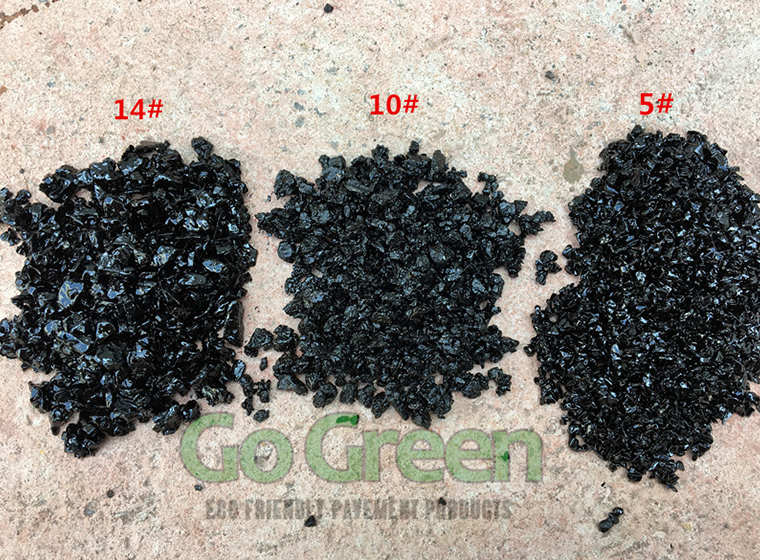
Cold mix asphalt is generally available in three aggregate gradations:
Fine Grade (5 mm)
Medium Grade (10 mm)
Coarse Grade (13–14 mm)
Each grade is designed for different pothole depths, sizes, and traffic conditions. Choosing the proper material improves compaction, durability, and overall repair performance.
In the following section, we'll explain how to select the right cold mix asphalt for your specific repair application.
| Product Specifications & Aggregate Gradation | |||||
| Product Model | Aggregate | Proportion | Core Characteristics | Core Advantages | Application Scenarios |
AC-5 Cold Asphalt Mixture | 3–5 mm | 85% | Ultra-high fine aggregate ratio; asphalt content 5.5–5.7%; maximum bonding strength | Excellent fitting performance and flatness for small pothole repairs | Fine repairs of tiny potholes, shallow surface cracks, sidewalks and residential pavement |
| 0–3 mm | 13% | ||||
| Mineral Filler | 2% | ||||
AC-10 Cold Asphalt Mixture | 5–10 mm | 61% | Balanced coarse & fine aggregates; sufficient aggregates within 3–10 mm range; asphalt content 5.2–5.5%; balanced strength and bonding force | Universal mainstream material, outstanding compression and rutting resistance | Conventional potholes on urban arterial roads, high-traffic sections, emergency repairs in rainy seasons |
| 3–5 mm | 22% | ||||
| 0–3 mm | 15% | ||||
| Mineral Filler | 2% | ||||
AC-13 Cold Asphalt Mixture | 10–15 mm | 15% | Highest proportion of coarse aggregates, wide gradation span; asphalt content 5.0–5.2%; optimal load-bearing performance | Specially for heavy-duty pavements, high bearing capacity, resistant to settlement and cracking | Exclusive for heavy-duty pavements, high load capacity, anti-settlement and anti-fracture |
| 5–10 mm | 46% | ||||
| 3–5 mm | 22% | ||||
| 0–3 mm | 15% | ||||
| Mineral Filler | 2% | ||||
Installation Best Practices: Follow the "3–4 Times Aggregate Size Rule"
Proper installation is just as important as choosing the right cold mix asphalt. For deep potholes, placing all the material in a single lift can result in inadequate compaction, premature settlement, and reduced repair life.
The 3–4 Times Aggregate Size Rule
When the pothole depth exceeds 50 mm (2 inches), the repair should always be completed in multiple layers.
Follow these guidelines:
• Each lift should be no thicker than 3–4 times the maximum aggregate size.
• For LB-10 Cold Mix Asphalt (maximum aggregate size: 10 mm), each layer should be 30–40 mm thick.
• Compact every layer thoroughly before placing the next one.
• Continue layering until the repair reaches the final surface level.
Proper layered installation ensures maximum density, stronger bonding, and a longer-lasting repair.
Recommended Compaction Density
| Road Type | Recommended Compaction |
| Standard Roads | 93% |
| Highways & Heavy Traffic Roads | 95% |
Higher compaction results in greater load-bearing capacity, improved durability, and better resistance to rutting and water infiltration.
Quick Guide: Which Cold Mix Asphalt Should You Choose?
Selecting the correct aggregate size is simple:
•Fine Grade (5 mm) – Best for shallow potholes, thin surface repairs, sidewalks, and bicycle lanes.
•Medium Grade (10 mm) – The ideal choice for most municipal roads, residential streets, parking lots, and general pothole repairs.
•Coarse Grade (13 mm) – Recommended for deep potholes, heavy-duty pavements, industrial yards, and roads carrying heavy truck traffic.
•Repairs deeper than 50 mm – Always install the material in multiple compacted layers rather than filling the entire depth at once.
Cold Mix Asphalt Installation Tips
Following a few simple installation practices can significantly improve repair quality and service life.
1. Clean the Pothole Thoroughly
Before placing the material, remove all loose stones, dirt, standing water, and debris using a broom, shovel, or compressed air. Any loose or damaged pavement around the edges should also be removed to create a sound repair area.
2. Leave Extra Material for Compaction
After filling the pothole, leave the cold mix asphalt approximately 10 mm (3/8 inch) higher than the surrounding pavement. This allows for settlement during compaction and ensures the repaired surface finishes flush with the existing road.
3. Repairing Around Manholes
When repairing around manholes or utility covers, place the material slightly proud of the surrounding pavement. Normal traffic will continue to compact the repair and naturally level the surface over time.
4. Store Unused Material Properly
Unused cold mix asphalt can be resealed and stored for future repairs. Unlike hot mix asphalt, it remains workable for an extended period when stored in a sealed container or bag, reducing material waste and lowering maintenance costs.
Conclusion
Choosing the right cold mix asphalt and following proper installation procedures are the keys to achieving durable, long-lasting pothole repairs.
Whether you're repairing roads, highways, parking lots, utility trenches, bridge decks, or manhole surrounds, selecting the correct aggregate size and applying the material in properly compacted layers will maximize repair performance and extend pavement service life.
With Go Green Cold Mix Asphalt, road maintenance becomes faster, easier, and more cost-effective—helping municipalities, contractors, and facility managers keep asphalt pavements safe and durable with minimal traffic disruption.

X

Contact Anna via WhatsApp

WeChat for Inquiries

Copyright © Go Green Industrial (Shanghai) Co.,Ltd. All Rights Reserved | Sitemap

Follow us on Wechat